Framed chase racked or pulled away
Replace rotted framing and re-fasten the chase
The chase cover and roof joint are fixed too.
 Proudly American · Family owned and run in Spring Hill
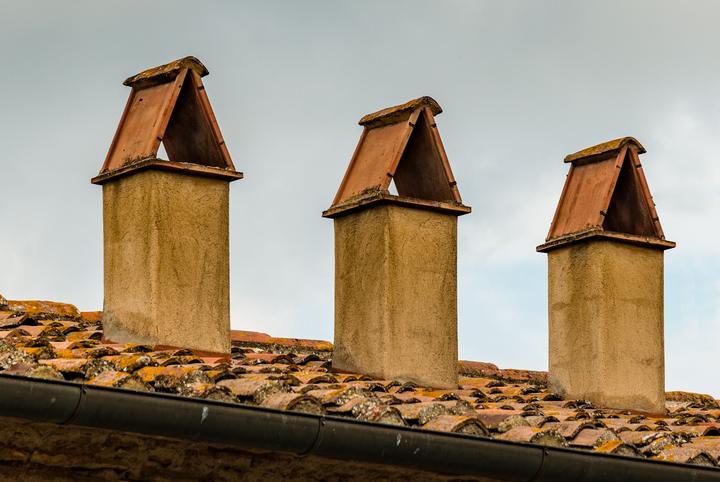
We trace why the chimney is moving, secure it, and fix the cause instead of caulking the gap.
Request a Free Inspection
Request Received
Thanks, your request is with us. Expect a call from our Spring Hill family to book the free inspection.
Quicker by phone? Call (352) 663-0381

Book your leaning chimney repair within 72 hours of your free inspection and take 10% off.
Leaning chimney repair begins by asking what let go. When a framed chase tilts, rotted plates, rusted fasteners or missing bracing are to blame, and carpentry puts it right. When a brick stack leans or opens a gap at the wall, failed mortar or a settling footing is the suspect, and the stack is rebuilt from sound masonry.
A chimney pulling away from the house is moving because something that held it has stopped holding. On a masonry chimney that can be mortar washed out of the joints, a crown or cap that let water in for years, or a footing that has settled. On a framed chase it is most often the wood or the fasteners: a rotted bottom plate, studs softened by water from a failed cover, or nails and straps that rusted through.
The difference matters because the two get fixed in completely different ways. A chimney pulling away from the house needs repair at the cause, and a chimney separating from the house calls for repair of whatever let go. A tilting chimney repair that starts with caulk or a strap across the gap only hides the movement while the cause keeps working.
A framed chase has no footing of its own. It is a box of studs and sheathing built on the roof or against the wall, wrapped in siding or stucco, around the metal pipe of a factory-built fireplace. When it leans, the wood or its connections have failed. Water from a rusted chase cover runs down inside, the plates and lower studs rot, and the box racks out of square. Wind on a tall chase finishes the job.
The repair is carpentry. We open the side that moved, replace rotted plates and studs, re-fasten the chase to the house framing and add bracing where it was missing. The metal pipe stays in its listed position: section R1005.1 of the Florida Building Code, Residential, says a factory-built chimney is installed to the maker's instructions, and section R1005.5 says framing that supports it must be designed for that load. One maker's fireplace manual limits a chimney carried only by the fireplace to 20 feet and calls for support above that, and another maker's drawing marks extra lateral support for a chimney enclosed in a chase where needed.
Because water is the usual cause, the chase cover, siding and roof joint are fixed in the same visit. Leaving the leak in place only rots the new framing.
Masonry is heavy and stiff, so a leaning chimney stack repair starts by finding where the movement begins. If the lean starts above the roof, the brick there is usually loose from failed mortar, and the stack is taken down to sound masonry and relaid plumb. If the whole chimney has rotated from the ground up, the footing is the question.
Section R1003.2 of the Florida Building Code, Residential, calls for masonry chimney footings of concrete or solid masonry at least 12 inches thick, extending at least 6 inches past the chimney on every side. We do not guess at a footing. When the lean starts at the ground, the owner brings in a structural engineer, and the rebuild follows the engineer's plan. For a stack that must come down in full, chimney rebuild covers the masonry work.
A chimney that is clearly moving should not be used. Do not light the fireplace, keep people and cars away from the side it leans toward, and stay off the roof. The first visit checks whether anything is loose enough to fall, and anything that is gets taken down or secured that day before the full repair is planned.
The inspection is free. We take plumb readings, look at the roof joint, the attic and the fireplace, and open a small section of a chase if the framing has to be seen. The written estimate says what is moving, why, and whether the fix is reframing, a partial rebuild or a referral to an engineer first. The leaning chimney repair cost depends on what the inspection finds, and you see it in writing before work starts. The work follows NFPA 211, the Standard for Chimneys, Fireplaces, Vents, and Solid Fuel-Burning Appliances, and the Florida code. As a local, family-owned business with an experienced crew, Proudly American, we tell you plainly when the job is bigger than a repair.
Where the movement starts decides between a repair and a rebuild.

Leave your details and we will call back to pick a time that suits you.
Request Received
Thanks, your request is with us. Expect a call from our Spring Hill family to book the free inspection.
A gap opening between a chimney and the wall is a symptom, and the cause decides the repair. On a framed chase it is usually fasteners, framing or rot; on brick it can be the mortar or the footing. Our local, family-owned crew traces it to the source, secures anything loose, and puts the fix in a free written estimate.
Run by a Spring Hill family: experienced hands, a written estimate before work starts and a workmanship warranty on our repairs.







Our Proudly American family crew finds why it moved and fixes the cause, not the gap.
The inspection costs nothing. Schedule any service in the 72 hours after it to get a 10% discount.
Request Received
Thanks, your request is with us. Expect a call from our Spring Hill family to book the free inspection.
Quicker by phone? Call (352) 663-0381