Normal soot, parts in good shape
Full cleaning from cap to stove
Draft with a small fire afterwards.
 Proudly American · Family owned and run in Spring Hill
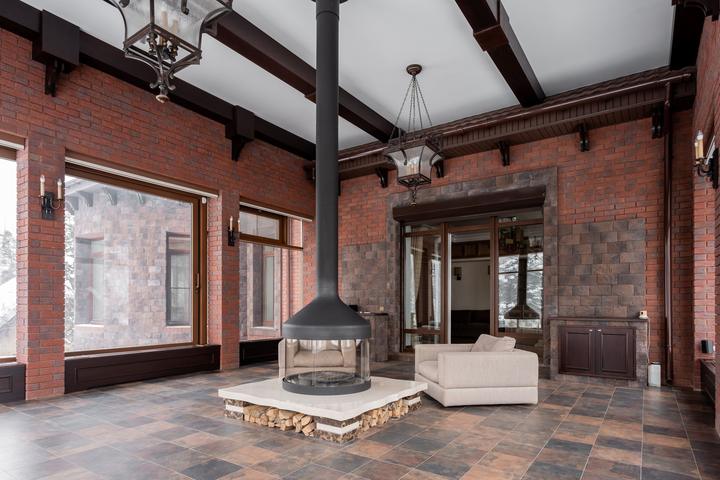
The rain cap cleaned, the chimney brushed top to bottom, the stovepipe cleaned and the baffle checked, with the room covered the whole time.
Request a Free Inspection
Request Received
Thanks, your request is with us. Expect a call from our Spring Hill family to book the free inspection.
Quicker by phone? Call (352) 663-0381

Book your wood stove cleaning within 72 hours of the free inspection and take 10% off.
A full wood stove cleaning works through the whole system: the rain cap, the chimney from the roof down, the stovepipe between stove and ceiling, and the baffle area inside the stove. The technician also checks the firebrick, the door gasket and the chimney parts, and notes anything worn on a written record.
Wood smoke cools as it rises, and some of it condenses on the inside of the pipe as soot and tar. Drolet's wood stove manual explains that slow, smoky fires build that layer fastest, that it can burn very hot if it ignites, and that soot or creosote thicker than an eighth of an inch means the system needs cleaning right away. The same manual asks for the chimney to be cleaned and inspected at least once each year, and the U.S. Fire Administration gives homeowners the same advice: have the chimney inspected and cleaned each year by a professional.
A wood stove system has three parts to clean, not one: the stove itself around its flue outlet and baffle, the stovepipe in the room, and the listed chimney through the ceiling and roof. The title of NFPA 211, the Standard for Chimneys, Fireplaces, Vents, and Solid Fuel-Burning Appliances, names the chimney and the stove together, and we clean them as one system. A wood stove chimney sweep covers all three; an open masonry fireplace is a different job, covered on our chimney sweep page.
Where the stove's chimney goes straight up through the ceiling and out the roof, wood stove chimney cleaning starts at the top. A technician climbs to the chimney where the roof is safe to walk, takes off the rain cap and cleans it, including any screen it carries. Drolet's manual describes the chimney as the engine of the stove: the heat in the flue gas makes the draft that pulls in air and keeps smoke inside the stove. A cap or screen packed with soot narrows the one outlet that whole draft depends on, so it is cleaned on every visit, not only when it looks bad.
With the cap off, the chimney is brushed from the top down with a brush sized to the flue, so the soot falls toward the stove. Inside, the baffle has been taken out and the stove opening is closed off, and the soot is vacuumed from the stove and bagged. The cap goes back with its own fasteners. Drolet's manual says factory-built chimney parts come only from the chimney's own brand and model, so a damaged cap is replaced with the matching part, never a part from another chimney line.
While we are on the roof we look at the storm collar and the seal where the chimney leaves the roof, and at the chimney sections for rust or dents. Leaks and loose parts found there are written down and handled under our wood stove repair service.
The stovepipe between the stove and the ceiling holds deposits too, most of all at elbows and any sideways run. Drolet's manual asks for a way to clean the pipe without moving the stove, either a cleanout or a pipe assembly that can come apart, and for a straight connector it calls for a telescopic section or an inspection wrap. Where your pipe has one, we open it there for the wood stove pipe cleaning. Where the pipe was screwed together with no way to open it, we clean it as far as we can reach and offer to add a slip section, so next year's cleaning is easier.
Each joint goes back with at least three screws and the male ends pointing down toward the stove, the way the manual sets it out. A straight run collects less than a run with corners, which is worth knowing if the stove is ever moved.
The baffle sits above the fire and sends the smoke on a longer path. Drolet's manual says to inspect the firebrick or refractory panels and the baffle and replace anything broken, and warns that running a stove with a cracked or missing baffle can cause unsafe temperatures. We lift the baffle out to clean above it, look at it, and set it back. Light brown stains on the glass are, in the maker's words, a sign of smoky fires, which also means faster build-up in the chimney, so we look at the air setting and the wood you burn as well.
Drolet's manual names the signs of a poor draft: cold air falling down the chimney when the stove is out, slow kindling, and smoke rolling out when the door is opened. A dirty cap or pipe produces the same signs, which is why the first step is always to clean and then judge the draft with a small fire. If the stove still smokes on a clean system, the chimney route or height is the next thing to look at.
The glass and the ash are yours to look after. Clean the glass only when the stove is cold, with a stove glass cleaner, and never run the stove with cracked glass. Ash goes into a metal container with a lid, and the U.S. Fire Administration says to set that container outside at least 10 feet from the house.
The chimney and the roof are not a weekend job. Drolet's own manual calls chimney sweeping difficult and dangerous, the roof work carries a real risk of a fall, and a cap or pipe joint put back wrong can let smoke and carbon monoxide into the room. If a chimney fire ever happens, call 911, and do not light the stove again until the stove and chimney have been inspected, as the maker's manual instructs.
Our family owns and runs this local Spring Hill company, Proudly American, with an experienced crew on every roof. Our wood stove cleaning service begins with a free inspection and a written estimate, and the soot leaves with us.
Most visits end with a clean system. Some find a part that needs attention.

Leave your details and we will call back to pick a time that suits you.
Request Received
Thanks, your request is with us. Expect a call from our Spring Hill family to book the free inspection.
Sweeping a wood stove takes two ends of the house. Up on the roof, the rain cap comes off and the chimney is brushed downward; inside, the baffle comes out and the stovepipe is cleaned, so the soot ends up in one place we can catch. Our family-run Spring Hill crew covers the room first and leaves with every bag of soot.
Run by a Spring Hill family: experienced hands, a written estimate before work starts and a workmanship warranty on our repairs.






Our local, Proudly American family crew cleans from the cap down and leaves the room as it found it.
The inspection costs nothing. Schedule any service in the 72 hours after it to get a 10% discount.
Request Received
Thanks, your request is with us. Expect a call from our Spring Hill family to book the free inspection.
Quicker by phone? Call (352) 663-0381