Masonry fireplace in good shape
Vented log set or a sealed insert with a liner
The flue is cleaned and inspected first.
 Proudly American · Family owned and run in Spring Hill
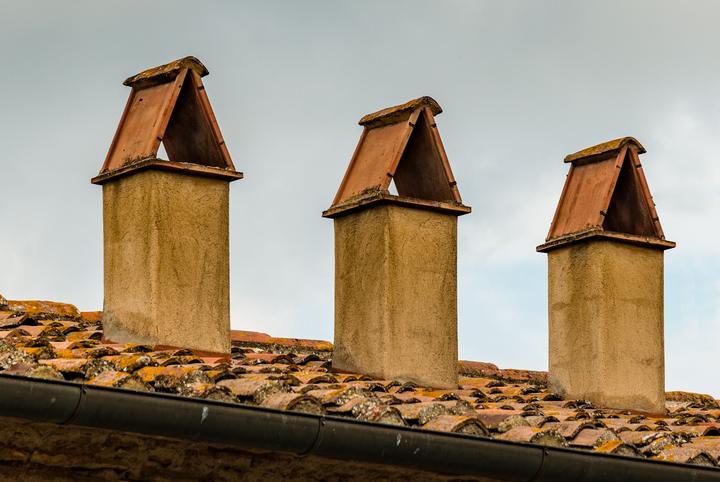
A wood fireplace turned into a gas fire the safe way, only where its listing allows, with the flue checked and cleaned first.
Request a Free Inspection
Request Received
Thanks, your request is with us. Expect a call from our Spring Hill family to book the free inspection.
Quicker by phone? Call (352) 663-0381

Book your gas fireplace conversion within 72 hours of your free inspection and take 10% off.
Gas fireplace conversion swaps wood for gas in an existing fireplace. One route is a vented log set, burning under the open damper in the old flue; the other is a sealed insert venting through its own liner. On a factory-built unit, the conversion must be one its listing allows, and a plumber runs the gas line.
A fireplace conversion to gas takes one of two forms. A vented gas log set puts a burner, a grate and molded ceramic logs into the firebox you already have, and its exhaust rises up the old flue past a damper that is held open. It looks most like a wood fire. A sealed gas insert is a closed appliance that slides into the opening, with a glass front and its own vent pipes running up inside the chimney to the top.
Either way, Florida's Fuel Gas code wants each appliance listed and installed to its maker's instructions: section 602.1 covers decorative gas appliances in a solid-fuel fireplace, listed to ANSI Z21.60; section 604.1 covers vented gas fireplaces, listed to ANSI Z21.50; and section 605.1 covers vented gas fireplace heaters, listed to ANSI Z21.88. The label on the appliance shows which listing it carries.
A factory-built wood fireplace is listed for what it was tested with, and conversion has to stay inside that listing. The installation manual for one maker's wood fireplace series says it is approved as a wood-burning fireplace, or for a vented gas log approved to ANSI Z21.60 or Z21.84, or for a vent-free gas log heater approved to ANSI Z21.11.2, and its side panels even carry gas line knockouts. Another maker's wood fireplace manual says the opposite about vent-free logs: it was not tested with an unvented gas log set, and one must not be installed.
The Florida Building Code, Residential, backs that up in section R1004.4: an unvented gas log heater does not go into a factory-built fireplace unless the fireplace system was specifically tested, listed and labeled for it under UL 127. So the first step of any conversion on a prefab unit is the label inside the opening and the manual it points to. Some units allow vented logs only, some allow more, and some allow none. We do not convert a fireplace whose listing does not allow it.
A flue that served wood fires carries what those fires left behind, so every gas fireplace conversion from wood starts there. Florida's Fuel Gas code, section 503.5.6, says a chimney previously used by a solid-fuel fireplace is examined and cleaned before a gas appliance is connected to it. One gas log maker's manual goes further: the flue, the damper and the firebox are cleaned of soot, ashes and loose paint before installation.
For a vented log set, the damper must stay open while the logs burn. Log set makers supply a damper clamp or stop to keep it from closing fully, and it is fitted to the damper blade as part of the install. For an insert, a liner runs from the insert to the top of the chimney, and the opening around it is sealed.
A conversion needs gas at the firebox. Running a new line from the meter or the propane tank is plumbing work, done by a plumber or gas contractor, and we do not install gas lines. Where a line is already stubbed into the fireplace, we connect the appliance at its valve, light it, and leak test every joint we made. The written estimate says plainly which part is ours and which is the plumber's.
Whether you can convert a gas fireplace to wood depends on what you have. In a gas to wood fireplace conversion, a wood fireplace that had gas logs added can go back to wood once the log set is removed, the gas line is capped by a plumber, and the whole flue gets a full inspection, because a damper clamped open for years and a flue that only saw gas exhaust need checking before the first wood fire. One log maker's manual says solid fuel must never be burned while its log set is in the firebox.
A fireplace built and listed as a gas appliance, such as a direct-vent unit, is a different case. Its listing is for gas, and it cannot be converted to burn wood. Changing that means replacing it with a wood unit and its own chimney, priced as fireplace replacement.
The free inspection reads the label, looks up the flue and checks the damper. Conversion and cleaning are priced in a written estimate before work starts. Our experienced crew comes from a local, family-owned business, Proudly American, that would rather say no than convert a unit unsafely. Log set choices are covered in more depth under gas log installation.
The fireplace and its listing decide what conversion is possible.

Leave your details and we will call back to pick a time that suits you.
Request Received
Thanks, your request is with us. Expect a call from our Spring Hill family to book the free inspection.
Converting a fireplace to gas starts with a question most people skip: does your fireplace allow it. Our local, family-owned crew reads the label of a factory-built unit or inspects a masonry one, cleans the flue, and fits a vented log set or a sealed insert that the fireplace and the code accept. The inspection is free.
Run by a Spring Hill family: experienced hands, a written estimate before work starts and a workmanship warranty on our repairs.







Listing checked, flue cleaned, and gas fitted only where it belongs, by a family business that is Proudly American.
The inspection costs nothing. Schedule any service in the 72 hours after it to get a 10% discount.
Request Received
Thanks, your request is with us. Expect a call from our Spring Hill family to book the free inspection.
Quicker by phone? Call (352) 663-0381