Can You Burn Palm Fronds in Florida?
What state law calls a frond, when a pile may burn, and why the fire pit is the wrong place.
Request a Free Inspection
Request Received
Thanks, your request is with us. Expect a call from our Spring Hill family to book the free inspection.
Quicker by phone? Call (352) 663-0381
What Florida Law Calls a Palm Frond
Florida writes the frond into the law. Section 590.125(1) of the Florida Statutes defines yard trash as vegetative matter from landscaping and yard maintenance, and it lists the examples: leaves, shrub trimmings, grass clippings, brush and palm fronds. So a pile of fronds after a trimming day is yard trash, the same as a pile of oak leaves.
That matters because Florida treats two fires differently. One is burning yard trash to get rid of it. The other is a recreational fire for warmth, cooking or company. They sit under different rules, and the question of whether you can burn palm fronds depends on which of the two you are lighting.
The Conditions for Burning Yard Waste at Home
The Department of Environmental Protection rule on open burning, 62-256.700(1), allows a homeowner to burn yard waste when every one of its conditions is met. Read as a checklist, it looks like this:
- The yard waste came from a residence of not more than two family units, and you burn it on the same property.
- The fire is lit after 9:00 a.m. Eastern time and out no later than one hour before sunset.
- No burning during windy conditions.
- The fire is in a noncombustible container, or in a pile no more than eight feet across on ground cleared of anything that can burn.
- It sits at least 25 feet from woods, brush or any combustible structure, 50 feet from a paved public road and 150 feet from any occupied building you do not own or lease.
- Someone attends it the whole time, with fire extinguishing equipment ready.
- The material is dry enough to burn well and keep smoke down.
Why a Fire Pit Is the Wrong Place for Fronds
- Spark screen
- Firewood
- Clear ground around the pit
Florida's recreational burning clause, 62-256.700(10), allows plant material and untreated wood in a campfire or outdoor fireplace, so a frond in a fire pit is not automatically against the state rule. It is still a poor idea, and the EPA's Burn Wise guidance for backyard fires says never to burn yard waste in them because it makes more smoke and the smoke can be toxic.
There is a practical reason too. A dry frond is a large, thin, light piece of fuel with a lot of surface. It catches all at once, burns in a tall, fast flare and can lift burning pieces up and out of the pit on the heat. A green frond does the opposite and smolders, sending thick smoke across the yard. Neither behaves like a split log settling into coals.
Fronds Near a Chimney or Outdoor Fireplace
- Chimney stack
- Stone or brick facing
- Concrete footing
Dead fronds collect on roofs, in gutters and on top of outdoor fireplaces, right where a fire feature throws its sparks. The U.S. Fire Administration asks that fire pits, chimneys and outdoor fireplaces be used at least 10 feet from your home or anything that can burn, and a skirt of dry fronds hanging over a fire feature is something that can burn.
The Smokey Bear campfire guidance adds a vertical rule: keep clearance overhead of at least three times the height of the flames, away from low-hanging branches. A palm leaning over the patio fireplace fails that test even when its trunk is well away. Trim the palm back, clear the fronds off the roof and out of the chimney top area, and keep a spark screen on the outdoor fireplace.
Local Rules and Burn Bans
The state rules are a floor. Rule 62-256.300(4) says they do not relieve anyone of other laws, Florida Forest Service rules or local ordinances, and 62-256.300(3) stops all open burning during a National Weather Service Air Stagnation Advisory or when the Florida Forest Service decides the weather is unfavorable for safe burning. Before burning a frond pile in Spring Hill, check for any Hernando County burn ban and any rule of your own community association.
If burning is not allowed or not practical, the alternatives are collection, mulching or a drop-off site, which are set by your county or city solid waste service.
One more point about timing. A yard waste fire has to be out an hour before sunset, while a backyard fire pit is usually lit after dark. The two do not mix well: an evening fire pit fed with a pile of fronds is neither a proper yard waste burn nor a clean recreational fire, and it is the one most likely to send burning pieces toward the roof.
What to Have Ready if You Do Burn
The yard waste rule asks for adequate fire extinguishing equipment at hand, and the campfire guidance spells out what that looks like. Have these in place before the first frond goes on:
- A charged garden hose that reaches past the burn spot.
- A full bucket of water and a shovel.
- A cleared circle of bare ground around the pile or container.
- A plan for the end: water until the hissing stops, stir, water again, and feel for heat with the back of your hand.
When the Fire Feature Needs a Look
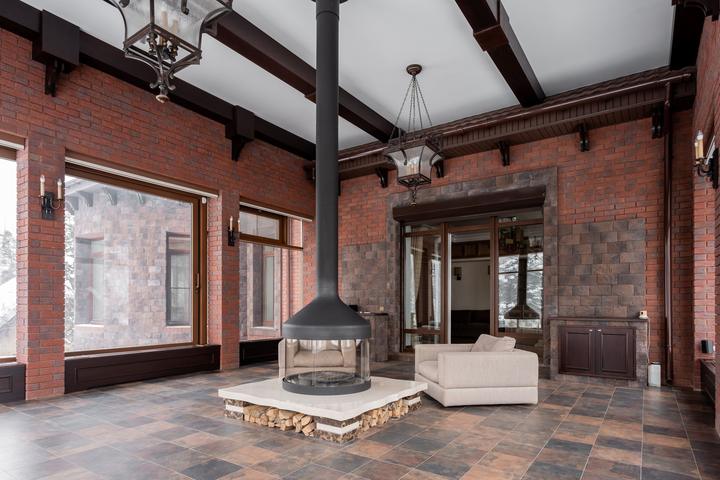
If fronds have been burning in a built-in fire pit or a patio fireplace, check the masonry and the top of any chimney for scorching and cracks, and look for fronds lodged in the chimney top. Our outdoor fireplace service covers that inspection and the repairs that follow.
Clearing, inspecting and repairing outdoor fire features is part of what our experienced crew does. Our family-owned business is local to Spring Hill and Proudly American. Book a free inspection, a written estimate comes before anything is done, and you get a Proudly American straight answer about whether your fire feature is safe to use.
Sources
- Florida Statutes section 590.125, open burning definitions: 590.125(1) defines yard trash, naming leaves, shrub trimmings, grass clippings, brush and palm fronds
- Florida Administrative Code rule 62-256.700, Open Burning Allowed: 62-256.700(1) yard waste conditions (two family units, hours, windy conditions, container or 8-foot pile, 25/50/150 feet, attended, extinguishing equipment); (10) recreational burning
- Florida Administrative Code rule 62-256.300, Prohibitions: 62-256.300(3) adverse conditions; (4) local ordinances and FFS rules still apply
- Florida Administrative Code rule 5I-2.006 (Florida Forest Service open burning): 5I-2.006(11) recreational open burning attended and smothered
- U.S. EPA Burn Wise: backyard recreational fires: Never burn yard waste in backyard recreational fires; more smoke, can be toxic; seasoned dry wood
- U.S. Fire Administration: outdoor fire safety tips: Fire pits, chimneys and outdoor fireplaces at least 10 feet from your home or anything that can burn
- Smokey Bear wildfire prevention program: campfire safety: Overhead clearance three times flame height; water, bucket, shovel; drown, stir, feel
Homeowner Guides
Related Services
How a Visit Works
Proudly American
Run by a Spring Hill family: experienced hands, a written estimate before work starts and a workmanship warranty on our repairs.

10% Off Work Booked in the 72 Hours After Your Inspection
The inspection is free. Any service booked in the 72 hours after it is 10% off.

Request Your Free Spring Hill Inspection
Leave your details and we will call back to pick a time that suits you.
- Free inspection and a written estimate
- Same-day service available
- Family owned and run in Spring Hill
Request Received
Thanks, your request is with us. Expect a call from our Spring Hill family to book the free inspection.

A Free Look at Your Fireplace, From a Local Family
Ask for a free inspection at your Spring Hill home and see a written estimate before any work begins.