Roof Dryer Vent Leaking or Clogged at the Cap
Three sources of water at a roof dryer cap, and the lint and screen problems that make two of them worse.
Request a Free Inspection
Request Received
Thanks, your request is with us. Expect a call from our Spring Hill family to book the free inspection.
Quicker by phone? Call (352) 663-0381
Water at a Roof Dryer Vent: Three Different Problems
- Dryer
- Transition duct
- Vertical vent run
- Ceiling
- Attic
- Roof
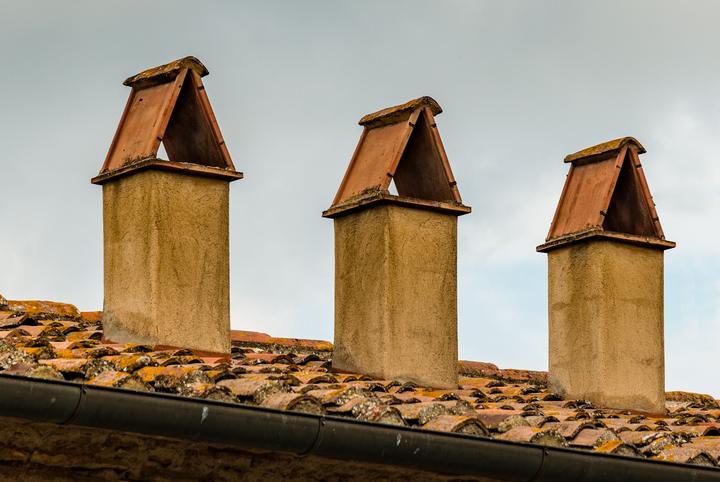
A roof termination is a metal cap, sometimes called a roof jack, set over a 4 inch duct that comes up through the roof deck. It has three jobs at once: keep rain out of the roof, let exhaust out of the duct, and keep birds and backdrafts from coming in. A leak means one of those jobs has failed, and the timing usually points to which. If you are not sure the cap is the dryer's at all, what does a dryer vent on roof look like shows how to tell it from plumbing vents and fan caps.
- Stain appears after rain, whether or not the dryer ran: the flashing or the cap body
- Water comes in during wind-driven rain and the flap is seen stuck open: a jammed damper
- Drips appear while the dryer runs or just after, even in dry weather: condensation in the duct
The Roof Jack's Flashing
- Chimney
- Counter flashing
- Roofing
Every hole in a roof needs flashing, and the dryer cap is no exception. Section R903.2 of the 2023 Florida Building Code, Residential, says flashing seals the roofing where it is interrupted and prevents water entry at penetrations through the roof plane. Section R903.2.1 requires flashing around roof openings and asks for corrosion-resistant metal. On a shingle roof, section R905.2.8.4 sends vent pipe flashing to the shingle maker's instructions, which set how the base of the cap is woven into the courses above and below it.
Flashing leaks show up as a stain on the ceiling or the roof deck around the duct after rain, regardless of laundry days. From the attic hatch you may see water tracks down the outside of the duct or a dark ring on the sheathing around the hole. The repair is roofing work at the cap: resetting or replacing the cap and its flashing so the upper courses lap over it and the lower edge sheds onto the roof below.
A Damper Stuck With Lint
Section M1502.3 requires a dryer termination to have a backdraft damper, a flap that opens when the dryer pushes air and falls shut when it stops. On a roof cap, the flap sits where the exhaust slows and cools, so lint collects on its hinge and edges. Once it is packed, the flap no longer closes, and wind-driven rain and insects get in through a cap that is supposed to be shut. The NFPA's dryer safety tips say to make sure the outdoor vent flap will open when the dryer is operating; on a roof, it also has to close.
GE's instructions set the bar for roof terminations: a roof vent must be equivalent to a 4 inch dampered wall cap in resistance to airflow, prevention of back drafts and the maintenance needed to keep it from clogging. A cap whose flap is heavy or sits behind a fine grille fails that test. Maytag rules out hoods that hold the flap with a magnetic latch for the same reason: the exhaust has to work harder to open it.
The Screened Cap That Should Not Have a Screen
Some roof caps carry a mesh screen meant to keep birds out. Section M1502.3 says screens shall not be installed at a dryer duct termination, and GE warns that lint catches in a screen, clogging the ductwork and creating a fire hazard. On a roof the clog is out of sight: drying times grow and the duct below fills with lint. Section M1502.3.1 also requires at least 12.5 square inches of open area at the terminal, which a packed screen does not leave. The reasons are covered in detail in do dryer vents have screens.
Condensation Running Back Down the Duct
Not every drip is rain. Dryer exhaust is warm and full of water, and on its way up through an attic the duct can be cooler than the air inside it. The water condenses on the inner wall and runs back down to the lowest joint, where it drips onto the ceiling or into the dryer hose. GE's instructions advise insulating ductwork that runs through an unheated area to reduce condensation and lint build-up, a subject covered in do dryer vents need to be insulated. A drip that only happens on laundry days points here, not at the roof.
What to Check From the Ground, and What to Leave
Do not climb onto the roof to clear the cap. Roof edges and slick surfaces are where homeowners are hurt, and prying at a cap can tear the flashing you are trying to protect. GE suggests inspecting and cleaning the exhaust system at least once a year with normal use, more often with heavy use. The NFPA says the same about cleaning lint from the vent pipe once a year, or sooner if drying takes longer than normal. The cleaning itself is described in how do you clean dryer vent on roof.
- Note when the water appears: after rain, during wind-driven rain, or on laundry days
- From the yard, with the dryer running, watch whether the flap on the roof cap lifts
- With the dryer off, look for the flap hanging open or lint visible at the cap
- From the attic hatch, look for water tracks on the duct or a stain around the hole in the roof deck
- Inside, check how long a normal load now takes to dry
Repairs at the Cap
We clear roof caps, replace screened or jammed caps with proper dampered ones, and reset the flashing at the cap as part of dryer vent repair. A duct that runs below the floor instead of up through the roof has its own leak story, told in dryer vent under slab.
Ours is an experienced, family-owned crew, local to Spring Hill and Proudly American. We start with a free inspection from the roof down and give you a written estimate that says which of the three problems you have.
Homeowner Guides
Questions and Answers
Why does water drip from the roof dryer vent when the dryer runs?
Is a leak around a roof dryer vent a roofing problem or a vent problem?
Can rain get into a dryer vent on the roof?
Related Services
How a Visit Works

Proudly American
Run by a Spring Hill family: experienced hands, a written estimate before work starts and a workmanship warranty on our repairs.

10% Off Work Booked in the 72 Hours After Your Inspection
The inspection is free. Any service booked in the 72 hours after it is 10% off.

Request Your Free Spring Hill Inspection
Leave your details and we will call back to pick a time that suits you.
- Free inspection and a written estimate
- Same-day service available
- Family owned and run in Spring Hill
Request Received
Thanks, your request is with us. Expect a call from our Spring Hill family to book the free inspection.

Catch the Chimney Problem While It Is Small
Ask for a free inspection at your Spring Hill home and see a written estimate before any work begins.