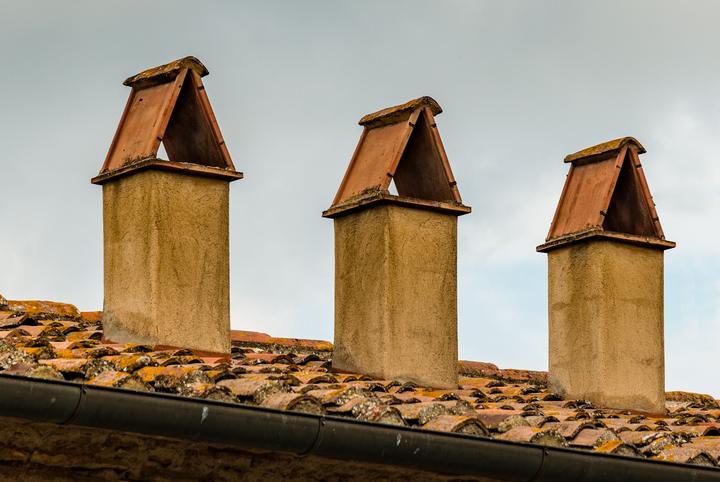
Why an Outdoor Fireplace Smokes Out the Front
Opening size, stack height, wind off the house and wet wood: the outdoor causes and their fixes.
Request a Free Inspection
Request Received
Thanks, your request is with us. Expect a call from our Spring Hill family to book the free inspection.
Quicker by phone? Call (352) 663-0381
What Smoke Out the Front Is Telling You
A fireplace draws because hot gas in the flue is lighter than the air outside, so it rises and pulls fresh air in through the opening. When smoke curls out under the lintel instead, the flue is not pulling hard enough to carry everything the fire makes. Outdoors there is no house around the fire to help or hurt the draft, so what you see is the fireplace's own balance between its opening, its flue and the wind.
Notice when it happens. Smoke only while lighting points to a cold flue. Smoke all evening points to size or height. Smoke only on some nights points to wind.
The cold-flue case is the easy one. A small, hot fire of dry kindling at the back of the fire box warms the column of air in the flue and gets the draft moving before the larger splits go on. If that cures it, the fireplace is sound and the habit is the fix. If smoke still rolls out after the fire has been burning hard for a while, keep reading, because the cause is built in.
An Opening Too Big for the Flue
The Florida Building Code, Residential, sets the flue size for a masonry fireplace by the size of the fireplace opening. Section R1003.15.1 gives the ratios: a round flue of at least one-twelfth of the opening area, a square flue or a rectangular one less than twice as long as it is wide of at least one-tenth, and a longer rectangular flue of at least one-eighth. Section R1003.15.2 offers a chart instead, which also takes the chimney's height into account.
Those sections are written for fireplaces in buildings, but the physics is the same on a patio, and they are the reference a mason works to. An outdoor fireplace built for looks, with a wide, tall opening over a modest flue, is the combination that smokes. Measure it yourself:
- Multiply the width of the opening by its height to get the opening area.
- Measure the inside of the flue at the top and work out its area.
- Divide the flue area by the opening area.
- Compare with the code ratios above for the flue's shape.
A Stack Too Short to Draw
Height drives draft. A taller column of hot gas pulls harder, which is why the code's flue chart in R1003.15.2 depends on chimney height measured from the fire box floor to the top of the flue. A patio fireplace kept short so it does not block a view or a second-story window has little pull to spare.
Indoors, section R1003.9 asks that a chimney rise at least 2 feet higher than any part of a building within 10 feet, and at least 3 feet above the point where it passes through a roof. An outdoor fireplace built against the back wall of a two-story house, or under the edge of a covered patio, sits right in the zone that rule is written to avoid.
Wind, Walls and the House Itself
Wind blowing over a roof or around a wall tumbles down the far side and can press on the top of a short outdoor chimney, pushing smoke back down the flue and out the front. The same fireplace that draws well on a still night smokes when the breeze comes off the house. A screen enclosure or a fence close behind the fireplace can create the same eddy.
You cannot move the house, but you can change how the top of the chimney meets the wind: more height, a cap that shields the outlet from downdrafts, or both.
The Fire Box and Throat
The passage from the fire box to the flue matters too. Section R1001.6 asks for a fire box at least 20 inches deep on a masonry fireplace, a throat at least 8 inches above the opening, and a passage through the throat, damper and smoke chamber no smaller than the flue itself. A shallow fire box or a pinched throat chokes the draft before the flue can do its work.
Section R1001.7.1 also requires masonry fireplaces in buildings to have a ferrous metal damper at least 8 inches above the top of the opening. On an outdoor fireplace a damper that is rusted half-shut acts like a too-small flue.
Wood and How the Fire Is Built
Wet wood makes more smoke than any fireplace can carry. The EPA's Burn Wise program says to burn only seasoned, dry wood, which burns hotter and cleaner, and suggests a moisture meter to check it. Build the fire toward the back of the fire box, start small to warm the flue, and add larger splits once it draws.
What You Can Check, and What a Technician Changes
- Chimney cap
- Chimney stack
- Smoke chamber
- Firebox opening
- Stone or brick facing
- Concrete footing
Safe checks from the ground: measure the opening and compare it with the flue, look up the flue with a flashlight for nests, fallen fronds or a collapsed liner, note where the wind comes from on smoky nights, and test with dry wood. Do not climb onto a patio roof or a chimney top to look; a fall from there is the bigger danger.
A technician can lower the effective opening with a smoke guard across the top, raise the stack, fit a cap that blocks downdrafts, repair the throat or damper, and clear the flue. Our outdoor fireplace service covers each of these, and our guide on fire pit distance from the house covers placement for a new fire feature.
Measuring comes before suggesting anything, which is how our experienced crew works. We are a family-owned, locally owned company here in Spring Hill, and Proudly American. Book a free inspection and the estimate comes in writing; the goal is Proudly American work on a fireplace you want to sit beside, not stand away from.
Sources
- 2023 Florida Building Code, Residential, chapter 10: chimneys and fireplaces: R1003.15.1 flue area ratios 1/12, 1/10, 1/8; R1003.15.2 chart by chimney height; R1003.9 termination 2 feet within 10 feet, 3 feet above roof; R1001.6 firebox depth 20 inches, throat 8 inches, passage not less than flue; R1001.7.1 ferrous metal damper 8 inches above opening
- U.S. EPA Burn Wise: backyard recreational fires: Burn only seasoned, dry wood; moisture meter
Homeowner Guides
Questions and Answers
Why does my outdoor fireplace smoke only on windy nights?
Why does my outdoor fireplace keep burning out?
How do I check if my outdoor fireplace opening is too big?
Related Services
How a Visit Works

Proudly American
Run by a Spring Hill family: experienced hands, a written estimate before work starts and a workmanship warranty on our repairs.

10% Off Work Booked in the 72 Hours After Your Inspection
The inspection is free. Any service booked in the 72 hours after it is 10% off.

Request Your Free Spring Hill Inspection
Leave your details and we will call back to pick a time that suits you.
- Free inspection and a written estimate
- Same-day service available
- Family owned and run in Spring Hill
Request Received
Thanks, your request is with us. Expect a call from our Spring Hill family to book the free inspection.

A Free Look at Your Fireplace, From a Local Family
Ask for a free inspection at your Spring Hill home and see a written estimate before any work begins.