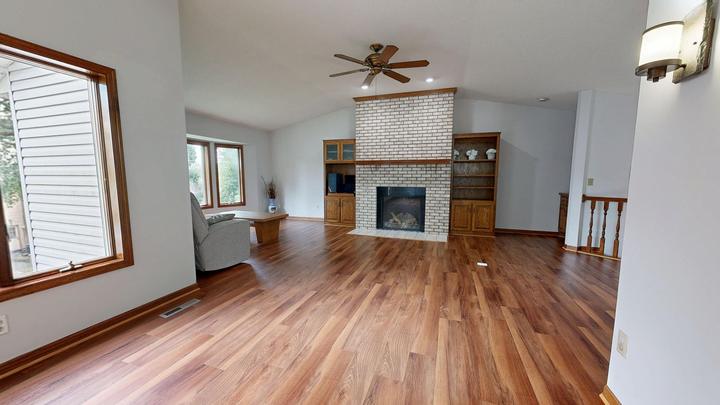
Why Wood-Burning Fireplaces Get Banned, and What Applies in Florida
Air-quality curtailment elsewhere, stove rules from EPA, and Florida's own open-burning rule.
Request a Free Inspection
Request Received
Thanks, your request is with us. Expect a call from our Spring Hill family to book the free inspection.
Quicker by phone? Call (352) 663-0381
What the Bans You Read About Are For
Headlines about fireplace bans almost always describe air-quality rules. EPA's Burn Wise questions page explains that no-burn days, also called burn bans or curtailment programs, are voluntary or mandatory measures that state and local agencies use to stop air quality from reaching unhealthy levels. On those days backyard and open burning are often prohibited, and some areas also limit wood stoves and fireplaces. Exact requirements vary by area, and programs generally provide a waiver for households whose only heat is wood.
The reason is the smoke itself. Wood smoke carries fine particles, carbon monoxide and toxic compounds such as benzene and formaldehyde. EPA gives one example of how much it can matter: in King County, Washington, residential wood smoke was the largest single source category of direct fine-particle emissions in its 2014 national inventory.
What Federal Rules Cover, and What They Leave Out
The federal rule people mix up with a ban is the New Source Performance Standard for residential wood heaters, adopted in 1988. It governs the manufacture and sale of wood stoves, pellet stoves, fireplace inserts, hydronic heaters and forced-air furnaces. EPA states that fireplaces and masonry heaters are not covered by it at all; a voluntary program lets fireplace makers qualify cleaner models, at no more than 5.1 grams of particles per kilogram of wood.
So no federal rule takes away an existing fireplace. Stove changeout programs run by some state and local agencies do require the old stove to be destroyed or made unusable, which is where the idea of stoves being banned comes from. EPA's Burn Wise program itself ran from 2009 to 2025; EPA stopped updating it on October 30, 2025, and keeps the site as a historical record.
What Florida Rules Say About a Fireplace Fire
Florida's open-burning rules sit with the Florida Forest Service. Rule 5I-2.006(11) of the Florida Administrative Code, on recreational open burning, says nothing in the chapter prohibits the legal burning of vegetative debris and untreated wood in a campfire, outdoor fireplace or other contained outdoor heating or cooking device. The rules are aimed at land clearing, pile burning and yard waste, not at the fireplace in your living room.
What can stop a fire for a while is a burn ban. The Forest Service says local burn bans are enacted by county governments and state bans cover larger areas when they become necessary, and it keeps a map of county-enacted bans. In Spring Hill the county is Hernando, and its Fire Rescue page notes that it does not issue burn permits; the Forest Service does. How a ban treats an indoor fireplace is a matter of the order's wording, covered in our guide on using a fireplace during a burn ban.
What Florida Code Asks Instead of a Ban
Where Florida does regulate fireplaces, it regulates how they are built. The 2023 Florida Building Code, Residential, sets the details in chapter 10. A few that decide whether a masonry fireplace burns cleanly and safely:
- A firebox at least 20 inches deep (section R1001.6).
- A ferrous metal damper at least 8 inches above the top of the opening, operable from the room (R1001.7.1).
- A hearth extension at least 16 inches in front of the opening, 20 inches for openings of 6 square feet or more (R1001.10).
- A chimney at least 3 feet above the roof where it passes through and 2 feet above anything within 10 feet (R1003.9).
When a Fireplace Should Stay Cold Anyway
A fireplace can be perfectly legal and still not fit to use. Smoke that rolls into the room, a cracked firebox, a damper that will not open or a flue nobody has looked up in years are reasons to wait. NFPA 211, as quoted in national chimney safety guidance, says chimneys, fireplaces and vents shall be inspected at least once a year for soundness, freedom from deposits and correct clearances.
The other reason is the weather. During a Florida dry spell with a county ban in force, read the order before lighting anything, indoors or out, and keep cold ashes in a covered metal container on a non-combustible surface outside, as EPA advises.
Keeping Your Spring Hill Fireplace in Use
- Flue
- Damper
- Hearth extension
- Hearth
- Chimney masonry
None of these rules takes a sound fireplace away from a Spring Hill home, but a smoky one wastes wood and invites complaints from the neighbors. A chimney inspection checks the firebox, damper, flue and cap against the code sections above. The visit is a free inspection with a written estimate for anything that needs work, carried out by an experienced crew from a locally owned, family-run business.
If the fireplace is fine, you will hear that too. We are a Proudly American company, and to us Proudly American service means keeping a good fireplace burning rather than selling a repair nobody needs.
Homeowner Guides
Questions and Answers
Are wood burning fireplaces bad for your health?
Are wood burning fireplaces illegal?
Why are wood burning stoves being banned?
Related Services
How a Visit Works
Proudly American
Run by a Spring Hill family: experienced hands, a written estimate before work starts and a workmanship warranty on our repairs.

10% Off Work Booked in the 72 Hours After Your Inspection
The inspection is free. Any service booked in the 72 hours after it is 10% off.

Request Your Free Spring Hill Inspection
Leave your details and we will call back to pick a time that suits you.
- Free inspection and a written estimate
- Same-day service available
- Family owned and run in Spring Hill
Request Received
Thanks, your request is with us. Expect a call from our Spring Hill family to book the free inspection.

Catch the Chimney Problem While It Is Small
Ask for a free inspection at your Spring Hill home and see a written estimate before any work begins.