How to Keep Bugs Out of a Chimney and Fireplace
A map of the five ways in, and the fix for each one.
Request a Free Inspection
Request Received
Thanks, your request is with us. Expect a call from our Spring Hill family to book the free inspection.
Quicker by phone? Call (352) 663-0381
The Five Ways Insects Get In
Insects reach a fireplace from the top, from the bottom, through the walls around it, or in your own arms with the firewood. Fixing one route while ignoring the others is why bug problems in a fireplace keep coming back. Here is the map, from the roof down:
- The flue top: an uncapped chimney is an open chute from the roof and the tree limbs over it.
- The damper: a rusted, warped or missing damper leaves the fire box open to everything in the flue.
- The cleanout and ash dump: a door at the base of the chimney outside that does not close is a ground-level entrance.
- Cracks and gaps: joints between the fire box, hearth, surround and wall, and where pipes or wires pass through.
- Firewood: logs carried in from a pile outside bring whatever was living in them.
The Top: A Cap, and What It Can and Cannot Stop
- Cap lid
- Mesh screen
- Cap base
- Top flue tile
- Crown
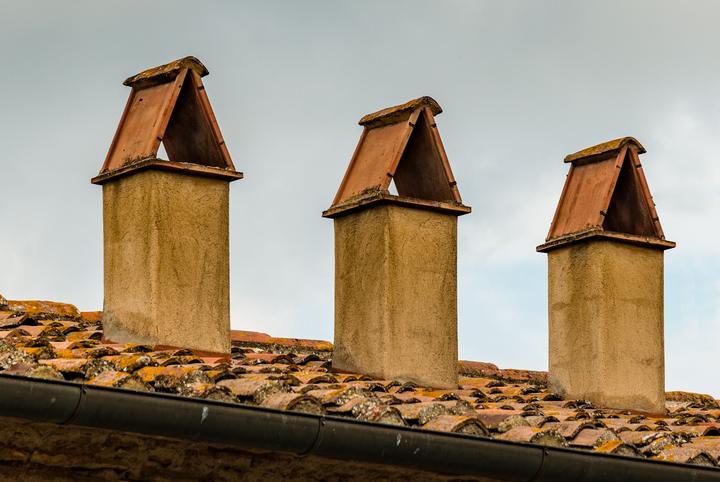
A chimney cap with a screen is the first fix, because it stops birds, rodents, frogs and the larger insects, and keeps rain from soaking the flue. Florida Building Code section R1003.9.2 sets the rule for a spark arrestor screen on a masonry chimney: openings no larger than 1/2 inch and not smaller than 3/8 inch, with a screen as heat and corrosion resistant as 19-gauge galvanized or 24-gauge stainless steel, and removable for cleaning.
Those numbers explain the limit. A mesh sized for sparks and draft lets ants, small roaches and flying insects through. The cap is necessary but not enough; the rest of the fixes below are what stop the small ones.
The Damper
Code section R1001.7.1 requires a ferrous metal damper on a masonry fireplace, set at least 8 inches above the opening. A damper that closes flat is a lid between the flue and the room. Rust, warping and a broken handle leave gaps, and in a fireplace that sits unused for months those gaps are the main route for anything that came down the flue.
Close the damper whenever the fireplace is cold, and look at it with a flashlight once a year. If light shows around a closed plate or the handle no longer seats it, the damper needs repair or a sealing top damper on the flue.
The Bottom: Cleanout Doors and Ash Dumps
A masonry chimney may have an ash dump in the fire box floor and a cleanout door outside at the base. Section R1003.17 requires a noncombustible cover on a masonry chimney cleanout. When that iron door rusts, warps or is left ajar, the base of the chimney becomes an opening at ground level, where roaches, ants and other crawling insects live. Check that it latches and sits tight against the masonry, and keep mulch and leaves away from it.
Cracks, Gaps and Bridges
UF/IFAS lists caulking of penetrations through ground-level walls, removing rotting leaves and limiting moist areas around a structure among the ways to make a home less attractive to American cockroaches. The same idea applies to a fireplace: caulk the joint between the hearth and the floor, the surround and the wall, and around any pipe or wire that passes near the chimney, using a material suited to the heat where it sits close to the fire box.
Then look up. UF/IFAS notes that American cockroaches move into homes from trees and shrubs beside buildings or with branches overhanging roofs, and that carpenter ants use tree limbs touching a house and wires attached to it as bridges. Limbs over the chimney top are a highway onto it. Trim them back.
Firewood
- End grain of a split log
- Drying cracks
- Loose bark
- Top cover
- Stacked rows
- Raised off the ground
Firewood is the route people forget, because they open the door for it themselves. UF/IFAS says the Florida woods cockroach, often called a palmetto bug, is mainly an occasional invader of homes, and that its presence indoors is usually the result of being carried in on something else, such as firewood. Store the woodpile outside, off the ground and away from the house wall, and bring in only what you will burn that evening. Never stack a week's worth on the hearth.
Before a log comes inside, knock it against another one over the pile and look at the ends and under the bark. Loose bark, soft rotted wood and soil stuck to the bottom of a split are where insects ride along. Wood that has been sitting on the ground against the house is the worst offender; a rack that holds the pile off the ground with air under it keeps the wood drier and less inviting.
Bugs or Something Bigger?
Large numbers of roaches coming from the fireplace and ants trailing out of the wall beside it are two specific problems with their own causes; see roaches coming from fireplace and ants coming out of fireplace. Insects living in the chimney can also be food for bigger visitors, covered in frog in fireplace.
Spraying a bug bomb or aerosol insecticide into a fire box you plan to light is not a fix. It does nothing about the way in, and a pest control company should treat any infestation in or near the home.
What We Do
The top and the damper are the chimney side of a bug problem, and they are our work. Our chimney cap replacement service fits a screened cap made to the code's mesh rules, and the same visit checks the damper, the cleanout door and the crown.
Spring Hill is home for our family-owned company, and our experienced crew climbs the roof so you do not have to. Ask for a free inspection; the written estimate follows. Small gaps are where bugs get in, so our local, Proudly American crew checks every one it can reach. Every cap we set is Proudly American work.
Sources
- 2023 Florida Building Code, Residential, chapter 10: chimneys and fireplaces: R1003.9.2 spark arrestor openings between 3/8 and 1/2 inch, 19-gage galvanized or 24-gage stainless, removable; R1001.7.1 ferrous metal damper 8 inches above opening; R1003.17 cleanout with noncombustible cover
- UF/IFAS Featured Creatures: American cockroach: American cockroach outdoors in moist shady areas; migrates from trees and shrubs with branches overhanging roofs; caulking penetrations, removing rotting leaves, limiting moist areas
- UF/IFAS Featured Creatures: Florida woods cockroach (palmetto bug): Florida woods cockroach (palmetto bug) an occasional invader, usually carried indoors on firewood
- UF/IFAS Featured Creatures: Florida carpenter ant: Carpenter ants use tree limbs touching structures and wires as bridges
Homeowner Guides
Related Services
How a Visit Works

Proudly American
Run by a Spring Hill family: experienced hands, a written estimate before work starts and a workmanship warranty on our repairs.

10% Off Work Booked in the 72 Hours After Your Inspection
The inspection is free. Any service booked in the 72 hours after it is 10% off.

Request Your Free Spring Hill Inspection
Leave your details and we will call back to pick a time that suits you.
- Free inspection and a written estimate
- Same-day service available
- Family owned and run in Spring Hill
Request Received
Thanks, your request is with us. Expect a call from our Spring Hill family to book the free inspection.

Catch the Chimney Problem While It Is Small
Ask for a free inspection at your Spring Hill home and see a written estimate before any work begins.