A Frog (or a Lizard) in the Fireplace
Why treefrogs choose a chimney, how to remove one safely and the gaps to close.
Request a Free Inspection
Request Received
Thanks, your request is with us. Expect a call from our Spring Hill family to book the free inspection.
Quicker by phone? Call (352) 663-0381
Which Frog It Probably Is
UF/IFAS Extension publication WEC218 calls the Cuban treefrog the most commonly encountered frog around suburban homes in much of peninsular Florida, and notes that Florida's native treefrogs rarely enter homes and buildings. So a frog that turns up on the hearth or behind the fireplace screen is, more often than not, the invasive one.
The same publication gives the field marks. Cuban treefrogs are the largest treefrogs in Florida, and a treefrog longer than 3 inches is almost certainly one. They have very large toe pads, big bulging eyes, warty skin, and skin on top of the head fused to the skull. Color is no help, since they range from creamy white to brown, gray or green. Smaller native species such as the barking treefrog and Cope's gray treefrog can look similar, so take a careful look before deciding.
Why a Chimney Appeals to a Treefrog
Cuban treefrogs spend the day sheltering in tight, enclosed spaces such as behind storm shutters and vinyl siding, according to UF/IFAS, and they are more prone to drying out than some native frogs, which may explain their liking for moist places. A flue that has not been used in months, damp from rain coming down an uncapped top, is a tall, dark, humid crevice.
The publication also describes how they get inside: through open doors, on potted plants, and through the plumbing vent pipes on the roof, which is how they end up in toilets. A chimney flue is another open pipe on the roof. Insects drawn to lights at night feed them, so a chimney near a porch light gets more visits.
Signs There Is More Than One
One frog on the hearth can be a wanderer. Several over a few weeks means they are living in or on the chimney. UF/IFAS describes the male Cuban treefrog's call as a raspy sound like a squeaking door, and notes that males also call from their daytime hiding places when a light rain falls. A squeaky-door call coming from inside the chimney during a daytime shower is a good sign of where they are sheltering.
Outside, look for frogs clinging near lights after dark, since UF/IFAS notes that homes feed them with insects drawn to lights. A chimney beside a porch light with frogs around it at night is the likely home.
Getting the Frog Out
Wear gloves. UF/IFAS warns that Cuban treefrogs release a sticky skin secretion when handled that is extremely irritating to the eyes and nose and can burn for more than an hour, and recommends rubber gloves and a good hand wash afterwards. Keep dogs and cats away, since the same secretion makes pets salivate heavily and has been linked to seizures.
- Let the fireplace go cold, then close the room door to keep the frog in one space.
- Put on rubber gloves, or use a plastic grocery bag over your hand as UF/IFAS describes.
- Catch the frog with one firm, quick movement and close the bag.
- If it is a native treefrog, let it go outdoors away from the house.
- If it is a Cuban treefrog, UF/IFAS asks homeowners to euthanize it humanely, and its publication describes how.
And the Lizards
A small lizard in the fireplace has usually come in through one of the same gaps. Usher it into a container and release it outside. The fixes below close the same openings for both.
A lizard or frog that has been trapped in the fire box for a while may be hiding under the grate, in the ash or behind a loose fire brick. Check those spots before you light a fire, and use a flashlight rather than your hand to look into gaps. If the ash is deep enough to hide an animal, it is also time to empty it into a metal can with a lid.
The Gaps to Close
The aim is to shut every open pipe and gap that leads from outside to the fire box. Most of them are at the top, a few are low.
- Chimney cap with screen. Florida Building Code section R1003.9.2 allows spark arrestor openings up to 1/2 inch, which closes the open top of the flue; a small frog may still squeeze through, so the damper matters too.
- Damper closed whenever the fireplace is cold, and checked for a tight seal.
- Glass doors or a fitted screen across the opening.
- The outside cleanout door shut tight.
- Gaps around a gas line or vent where it passes through the wall.
Around the House
UF/IFAS suggests covering plumbing vent pipes on the roof with ready-made covers or hardware cloth held with cable ties, turning off unnecessary outdoor lights at night and switching to yellow bug lights so fewer insects gather. It also recommends emptying buckets, bird baths and other standing water where tadpoles can grow. A chimney with a cap and a house with fewer bugs at the lights gets fewer frogs in the fireplace.
When to Call Us
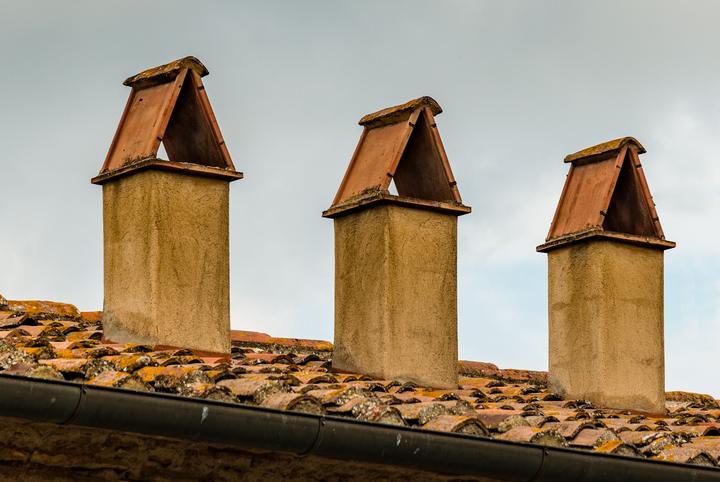
- Cap lid
- Mesh screen
- Top flue tile
- Brick stack
If frogs keep turning up, the chimney is open somewhere, and water getting into the flue may be part of the attraction. Our chimney animal removal work covers the cap, the damper and the low gaps, and we check whether water coming down the flue is keeping it damp. For bigger visitors, see can snakes come down chimney and a dead animal in the chimney.
Finding the gap is work for an experienced crew. Ours belongs to a locally owned, family-owned Spring Hill company that is Proudly American, and it starts with a free inspection and a written estimate. Frogs are welcome in the yard; a Proudly American crew can keep them out of the fireplace.
Sources
- UF/IFAS Extension WEC218: The Cuban Treefrog in Florida: Most commonly encountered frog around suburban homes in much of peninsular Florida; native treefrogs rarely enter homes; over 3 inches almost certainly Cuban; tight enclosed daytime shelters; prone to dehydration, moist areas; enter through roof plumbing vent pipes; insects at lights; irritating secretion, gloves; pets; capture with a bag; humane euthanasia; vent pipe covers, bug lights, standing water
- 2023 Florida Building Code, Residential, chapter 10: chimneys and fireplaces: R1003.9.2 spark arrestor openings not larger than 1/2 inch
Homeowner Guides
Related Services
How a Visit Works

Proudly American
Run by a Spring Hill family: experienced hands, a written estimate before work starts and a workmanship warranty on our repairs.

10% Off Work Booked in the 72 Hours After Your Inspection
The inspection is free. Any service booked in the 72 hours after it is 10% off.

Request Your Free Spring Hill Inspection
Leave your details and we will call back to pick a time that suits you.
- Free inspection and a written estimate
- Same-day service available
- Family owned and run in Spring Hill
Request Received
Thanks, your request is with us. Expect a call from our Spring Hill family to book the free inspection.

A Free Look at Your Fireplace, From a Local Family
Ask for a free inspection at your Spring Hill home and see a written estimate before any work begins.