Can Snakes Come Down the Chimney?
How a snake reaches the fireplace, what to do in the moment, and how the gaps are closed.
Request a Free Inspection
Request Received
Thanks, your request is with us. Expect a call from our Spring Hill family to book the free inspection.
Quicker by phone? Call (352) 663-0381
Two Ways In: From the Top and From the Bottom
Snakes enter buildings when conditions inside suit them and a way in is available, according to the Internet Center for Wildlife Damage Management. They are drawn to rodents and insects and to cool, damp, dark spaces. A fireplace that has not been used for months offers all of that, and a chimney gives two routes to it.
From the top, a climbing snake that reaches the roof along a tree limb, a vine or textured siding can slide into an uncapped flue. The same source notes that some non-venomous snakes are good climbers. From the bottom, the routes are the ones a homeowner rarely looks at: the cleanout door at the base of the chimney outside, the ash dump, a gap where the gas line passes into the fire box and cracks between the hearth and the floor.
What to Do When You See One
Keep it simple and keep your distance. The wildlife damage guidance notes that non-venomous snakes are harmless and cause no damage, but you cannot always tell which kind you have at a glance, and a cornered snake defends itself.
- Close the fireplace glass doors or screen if you can do it without reaching in.
- Shut the room door and put a towel along the gap underneath.
- Move children and pets to another part of the house.
- Watch where it goes from a safe distance, so the person removing it knows where to look.
- Call a wildlife removal professional.
What Not to Do
Do not light a fire to drive it out. The snake may move deeper into the chimney or the chase rather than out, and a fire in a flue that may hold a snake, a nest of its prey or other debris risks smoke coming back into the room. Do not reach into the fire box or the ash dump by hand, and do not spray insecticide or pour chemicals down the flue; they do not move a snake and they leave residue where you will later light a fire.
Killing a snake is rarely needed. The wildlife damage guidance says control of non-venomous snakes is seldom justified, that shooting belongs only where human health and safety are at risk, such as with a venomous snake, and that time spent educating people about snakes is valuable.
Why the Fireplace Attracts Them
Snakes follow food. The center's guidance says the primary food of most snakes, especially larger ones, is birds, bird eggs and rodents such as rats and mice, and that no snake control program is complete without removing rodents and their habitat. A chimney with a rat in the chase or a bird nest on the smoke shelf is a dinner table.
Cover near the house matters too. The same source recommends keeping vegetation mowed around buildings and removing bushes, boards, rocks and debris lying close to the ground, since they shelter both rodents and snakes. A woodpile stacked against the chimney is exactly that kind of cover. Move it a few steps out into the open, off the ground, and the snakes and the rodents they hunt lose a hiding place right at the door.
Closing the Gaps
The exclusion rule is short: seal all openings of 1/8 inch and larger. Snakes do not gnaw, the guidance notes, so sealants and closures that keep mice out also keep snakes out. Check corners of doors, around water pipes and where utility lines enter, and seal holes in masonry. Around a fireplace that means:
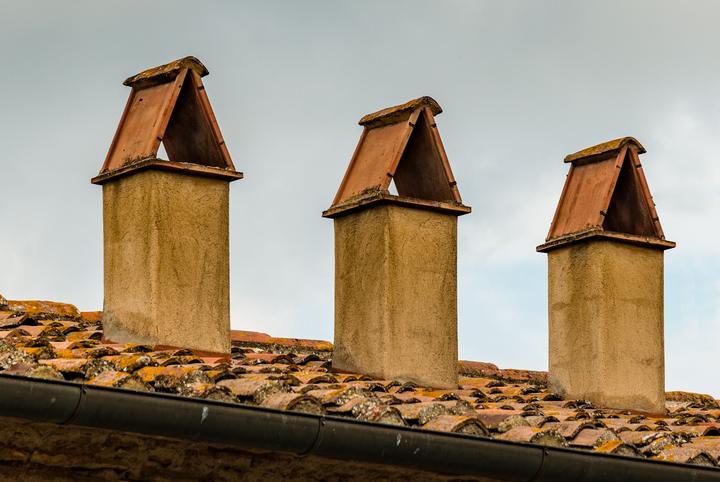
- A chimney cap with a screen; Florida Building Code section R1003.9.2 limits spark arrestor openings to 1/2 inch, which stops larger snakes and the rodents that attract them.
- A cleanout door that closes tight; section R1003.17 requires a noncombustible cover on masonry chimney cleanouts.
- The gap around a gas line where it enters the fire box, closed with a material rated for the heat.
- Cracks in the hearth, the fire box and the joint between hearth and floor.
- Glass doors kept closed when the fireplace is cold.
A Walk Around the Base of the Chimney
The low entry points are outside, at ground level, and you can check them in ten minutes in daylight. Walk the base of the chimney and the wall on either side with a flashlight, looking at it the way a snake would: any gap at ground level that leads somewhere dark.
The wildlife damage guidance specifically mentions sealing holes in masonry and securing weep vents with weep vent screens or a mesh fabric made for it. Weep vents are the small open joints near the bottom of a masonry wall that let water out; left open, they are also a doorway.
- The outside cleanout door: does it close fully, and is the frame tight to the masonry?
- Weep vents and open joints near the bottom of the chimney.
- Cracks where the chimney meets the slab or the house wall.
- Where the gas line, if any, enters the wall near the chimney.
- Vines, shrubs or a woodpile touching the chimney, which give cover and a ladder.
Removal Is One Job, Sealing Is Another
- Mesh screen
- Cap base
- Top flue tile
A wildlife removal professional catches and takes the snake away. The openings it used are a chimney job. Our chimney animal removal work covers closing the cap, the cleanout and the gaps around the fire box once the snake is gone, and checking the flue for the rodent or bird that drew it in. If the trail started with rodents, see rats in the chimney.
Low gaps are easy to miss, and our experienced crew knows where they hide in a fireplace. Locally owned, family-owned and Proudly American, our Spring Hill company seals them after a free inspection and a written estimate. Calm about the snake, firm about the gaps; that is the Proudly American approach.
Sources
- Internet Center for Wildlife Damage Management: snake damage prevention and control: Snakes enter when conditions suitable and entry available; attracted to rodents, insects, cool damp dark areas; seal openings 1/8 inch and larger; snakes do not gnaw; check doors, water pipes, utility lines, masonry holes; some non-venomous snakes are good climbers; non-venomous snakes harmless; lethal control only for human safety; rodents as food; remove cover
- 2023 Florida Building Code, Residential, chapter 10: chimneys and fireplaces: R1003.9.2 spark arrestor openings not larger than 1/2 inch; R1003.17 cleanout with noncombustible cover
Homeowner Guides
Questions and Answers
What size hole can a snake get through?
Why would a snake be in my chimney?
Will a chimney cap keep snakes out?
Related Services
How a Visit Works

Proudly American
Run by a Spring Hill family: experienced hands, a written estimate before work starts and a workmanship warranty on our repairs.

10% Off Work Booked in the 72 Hours After Your Inspection
The inspection is free. Any service booked in the 72 hours after it is 10% off.

Request Your Free Spring Hill Inspection
Leave your details and we will call back to pick a time that suits you.
- Free inspection and a written estimate
- Same-day service available
- Family owned and run in Spring Hill
Request Received
Thanks, your request is with us. Expect a call from our Spring Hill family to book the free inspection.

Catch the Chimney Problem While It Is Small
Ask for a free inspection at your Spring Hill home and see a written estimate before any work begins.