A Rat in the Chimney or Chase: Roof Rats and How They Get In
Climbers that come in from above: the signs, the entry points and a seal they cannot chew.
Request a Free Inspection
Request Received
Thanks, your request is with us. Expect a call from our Spring Hill family to book the free inspection.
Quicker by phone? Call (352) 663-0381
Why It Is Usually a Roof Rat
Roof rats and Norway rats both live around homes, and the one in a chimney is most likely the climber. The Internet Center for Wildlife Damage Management describes roof rats as very agile climbers with an excellent sense of balance, using their tails to travel along overhead utility lines. They are more aerial than Norway rats, often living in trees or on vine-covered fences, and they prefer to nest off the ground, rarely digging burrows when an elevated spot is available.
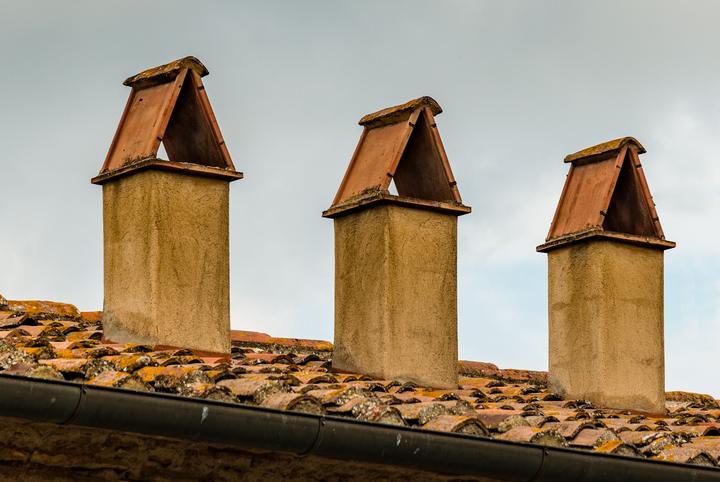
A chimney top, a framed chase with a hollow interior and an attic next to it are exactly that kind of elevated spot.
The same source notes that breeding can run nearly year-round in tropical and semitropical regions, with peaks in spring and fall, and that young rats are independent at about three months. A pair that moves into a chase is a family within a season, which is why the entry needs closing as soon as the sounds start, not after the next trip to the attic.
Can Rats Climb Down a Chimney?
They can get into one from above easily. A roof rat on the roof finds an uncapped flue, a torn cap screen or the gap where a rusted chase cover meets the framing, and goes in. Whether it climbs down a masonry flue or falls depends on the flue; smooth liner walls offer little to hold, which is how rats end up trapped on a smoke shelf or a damper.
A framed chase is another likely home. The chase is a wood box around a metal chimney pipe, and the space between the pipe and the framing is dry, dark and connected to the attic. Rats can live there without ever entering the flue.
The Signs

The roof rat damage identification page notes that sounds in the attic are often the first sign in a home: scurrying heard at night when the house is quiet. Indoors you may see fewer droppings than you expect, because roof rats live overhead and come down to feed. On a chimney the signs look like this:
- Scratching or running in the chase or behind the fireplace wall at night.
- Droppings on the hearth, the smoke shelf or the attic floor near the chase.
- Greasy dark smudges where fur rubs along a regular route, such as a roof edge or a wire.
- Shredded insulation near the chase in the attic.
- A chewed or bent cap screen, or a gap at the chase cover edge.
Why Metal and Mortar, Not Foam
The roof rat prevention guidance is specific: pay close attention to the roof and roof line, and plug or seal all openings greater than 1/2 inch with concrete mortar, steel wool or metal flashing. It also notes that finding roof rat entry points takes more time than for Norway rats because of their climbing ability, so the whole roofline needs checking, not just the chimney.
Expanding foam is the tempting quick fix. The same center's house mouse guidance says plainly that expanding foam reduces heat loss but will not prevent rodent entry. Rats chew straight through it.
- Chimney top: a cap with a screen. Florida Building Code section R1003.9.2 sets spark arrestor openings at no more than 1/2 inch.
- Chase cover: replaced or resealed where it has rusted or lifted.
- Gaps at the crown, flashing or siding: mortar or metal flashing.
- Roofline openings near the chimney: steel wool packed and covered, or metal.
Cut the Highways
Sealing works best when the routes to the roof are gone too. The roof rat guidance recommends removing vines growing on buildings and, when feasible, overhanging tree limbs that serve as travel routes, and it notes that dense shrubbery and vine-covered fences make ideal harborage. Trim limbs well back from the roof and the chimney, pull vines off the chase, and keep pet food and fallen fruit picked up so the yard stops feeding them. Rat guards for overhead wires exist, but the guidance warns they can fray insulation and cause short circuits, so wires are a job for the utility, not a ladder.
What Does Not Work
Ultrasonic devices are sold for rats, but the roof rat guidance says research has not proven them effective and they should be viewed with considerable skepticism, since rats quickly get used to repeated sounds. Taste and odor repellents fare no better: the same source says no chemical repellents are specifically registered for rat control. Mothballs, peppermint oil and the like in a chimney only add a smell.
Health and Wiring
Roof rats are implicated in diseases including murine typhus, leptospirosis, salmonellosis and rat-bite fever, according to the same source, so wear gloves and a mask when cleaning droppings and never handle a live or dead rat bare-handed. In homes they also tear up insulation for nests and gnaw electrical wiring, which is reason enough not to let a colony settle in a chase next to the attic.
Who Does What
- Mesh screen
- Top flue tile
- Crown
- Brick stack
Trapping or baiting the rats already inside is pest control work. Closing the chimney to them is ours: the cap, the chase cover, the crown and flashing gaps, and any animal that died in the flue. Our chimney animal removal covers the removal and sealing, and a dead animal in the chimney explains what happens when one gets trapped.
Checking the whole roofline, not just the cap, is how our experienced crew approaches rodents. Local and family-owned in Spring Hill, and Proudly American, we start with a free inspection and a written estimate. Where metal is needed, metal is what goes in; that is Proudly American work.
Sources
- Internet Center for Wildlife Damage Management: roof rat biology: Very agile climbers; travel overhead utility lines; more aerial than Norway rats; prefer to nest off the ground
- Internet Center for Wildlife Damage Management: roof rat damage identification: Sounds in the attic often first indication; few droppings indoors; smudge marks; gnaw wiring, tear insulation; disease list
- Internet Center for Wildlife Damage Management: roof rat prevention and control: Seal openings greater than 1/2 inch with concrete mortar, steel wool or metal flashing; roof line; vines and overhanging limbs; ultrasonic devices unproven; no registered chemical repellents
- Internet Center for Wildlife Damage Management: house mouse prevention and control: Expanding foam reduces heat loss but will not prevent rodent entry
- 2023 Florida Building Code, Residential, chapter 10: chimneys and fireplaces: R1003.9.2 spark arrestor openings not larger than 1/2 inch
Homeowner Guides
Questions and Answers
Does creosote keep rats out of a chimney?
Do ultrasonic repellers keep rats out of a chimney?
Are rats in a chimney chase dangerous?
Related Services
How a Visit Works

Proudly American
Run by a Spring Hill family: experienced hands, a written estimate before work starts and a workmanship warranty on our repairs.

10% Off Work Booked in the 72 Hours After Your Inspection
The inspection is free. Any service booked in the 72 hours after it is 10% off.

Request Your Free Spring Hill Inspection
Leave your details and we will call back to pick a time that suits you.
- Free inspection and a written estimate
- Same-day service available
- Family owned and run in Spring Hill
Request Received
Thanks, your request is with us. Expect a call from our Spring Hill family to book the free inspection.
Catch the Chimney Problem While It Is Small
Ask for a free inspection at your Spring Hill home and see a written estimate before any work begins.