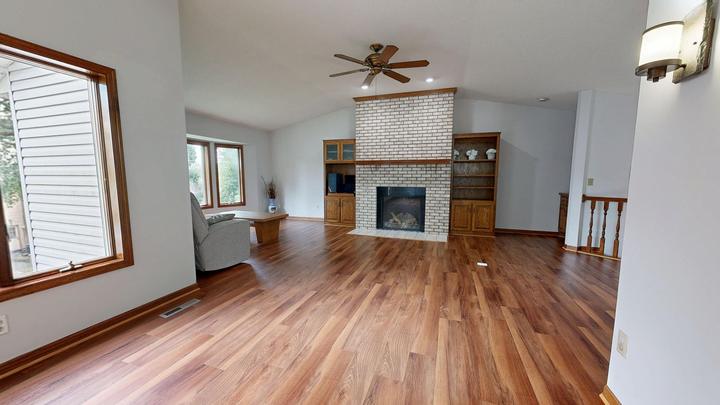
Termites in or Around a Fireplace
What termites can and cannot eat in a fireplace, the signs, and who treats what.
Request a Free Inspection
Request Received
Thanks, your request is with us. Expect a call from our Spring Hill family to book the free inspection.
Quicker by phone? Call (352) 663-0381
What Termites Can and Cannot Eat Here
Brick, block, mortar and firebrick are not food. UF/IFAS explains that termites consume cellulose, the structural material of plant cells, so any wood in a house is a potential food source. Around a fireplace that means the wood that surrounds or supports the masonry, and in some homes the chimney itself is wrapped in wood.
Subterranean termites, the native kind and the Formosan subterranean termite, work from the soil. UF/IFAS says they may enter a house through small cracks or joints in the foundation, or by building shelter tubes, the mud tubes, along a foundation wall. A masonry chimney that runs from the ground to the roof, with wood framing tight against it, gives them a covered route upward.
The Wood at Risk Around a Fireplace
Check these places first:
- A framed chase: the wood box around a metal chimney, especially where a leaking chase cover has kept it damp.
- Framing and sheathing beside a masonry chimney where flashing has failed.
- The subfloor and joists under the hearth extension.
- The mantel, its backing board and the trim around the surround.
- Wood siding or trim at the base of the chimney outside, where soil, mulch or a woodpile touches it.
The Hearth and the Floor Under It
- Mantel shelf
- Mantel legs
- Fireplace facing
- Firebox opening
- Hearth
- Wall above the mantel
The hearth is the part of a fireplace people forget sits on something. Florida Building Code Table R1001.1 calls for a hearth slab at least 4 inches thick and a hearth extension in front of the opening of 16 or 20 inches, depending on the size of the opening, with 8 or 12 inches to each side. In a home with a raised wood floor, that slab and extension rest on joists and subfloor below, and those are wood.
If the floor near the hearth feels soft, the hearth tiles have cracked along one edge, or there is a gap opening between the hearth and the floor, look underneath from a crawl space if the house has one, or ask the termite inspector to. Damage there is a structural repair, not a cosmetic one.
The Signs
Termite damage is usually hidden. UF/IFAS notes that infestations are often discovered during remodeling, or when foraging signs become obvious. What a homeowner can actually see:
- Mud tubes: narrow earthen tunnels running up the chimney base, the foundation or the inside of a chase.
- Swarms: hundreds to thousands of winged termites, called alates, during their dispersal flight, sometimes indoors.
- Shed wings piled on a window sill or the hearth.
- Wood that sounds hollow or has a blistered, peeling surface where termites have eaten it out under a thin skin.
- Soil packed into the tunnels of damaged wood, which UF/IFAS notes subterranean termites bring into their feeding galleries.
Swarm Season and Lights
The Formosan subterranean termite is found throughout Florida, mainly in urban areas, and UF/IFAS says it typically swarms from early April to late June, shortly after sunset, peaking in May, with flights that can number in the tens of thousands. Its winged adults are attracted to lights, which draws them to houses. The native subterranean termites fly at other times, from winter into late spring depending on the species, often on warm afternoons after rain.
A swarm inside the house, near the fireplace or a window, means a colony with access to the structure, not just termites in the yard.
What You Can Check Safely
UF/IFAS suggests probing wood with a screwdriver to find infested areas; damaged wood gives way. Do that gently on the trim, the mantel backing you can reach and the wood framing in the attic around the chimney. Look along the outside base of the chimney for mud tubes.
If you find a mud tube, do not scrape it off before someone looks at it. The Formosan publication notes that mud tubes and damage indicate activity, but live termites are needed to confirm an active infestation. Leave the evidence for the pest control company's inspection. UF/IFAS recommends a professional inspection whenever a structural infestation is suspected.
In the attic, check the framing where it meets a masonry chimney and the inside of a framed chase if there is an access panel. Termite-eaten wood often looks fine on the surface, so the screwdriver test matters more than the eye.
Who Treats What
Treating termites is pest control work. UF/IFAS describes liquid soil treatments around and under a structure and other methods, which a pest control company selects and applies. That is not chimney work, and we do not do it.
What the termites leave behind and what drew them often is our work. UF/IFAS lists moisture reduction in and around the structure among the ways to avoid conducive conditions for subterranean termites. A chase cover that leaks, failed flashing at the roof and a crown that lets water into the chase keep the wood around a chimney damp. Our chimney chase repair replaces damaged chase framing and siding and stops the water. If you see winged insects but are not sure they are termites, compare them with carpenter ants in ants coming out of fireplace.
Keeping Conditions Against Them
Pull mulch and soil back from the chimney base so wood trim does not touch the ground. Keep the woodpile away from the house and off the ground rather than stacked against the chimney. Fix leaks at the top of the chimney promptly, and keep gutters near it flowing.
Chase framing and roof-level leaks are what our experienced crew repairs. The business is local and family-owned, rooted in Spring Hill and Proudly American, and the visit is a free inspection, with a written estimate after. A Proudly American crew should also tell you when to call the pest company first, and we do.
Sources
- UF/IFAS Featured Creatures: native subterranean termites: Termites consume cellulose; any wood in a house is a potential food source; enter through small cracks or joints in the foundation or shelter tubes; infestations often found during remodeling; dispersal flights of hundreds to thousands; screwdriver probe; blistered or peeling surface; professional inspection; native flight seasons from December to May; warm afternoons after rain
- UF/IFAS Featured Creatures: Formosan subterranean termite: Formosan subterranean termite throughout Florida mainly in urban areas; swarms early April to late June shortly after sunset, peak in May; tens of thousands; attracted to lights; mud tubes; live termites needed to confirm; moisture reduction; liquid termiticides
- 2023 Florida Building Code, Residential, chapter 10: chimneys and fireplaces: Table R1001.1 hearth slab at least 4 inches; hearth extension 16 or 20 inches in front and 8 or 12 inches each side by opening size
Homeowner Guides
Related Services
How a Visit Works

Proudly American
Run by a Spring Hill family: experienced hands, a written estimate before work starts and a workmanship warranty on our repairs.

10% Off Work Booked in the 72 Hours After Your Inspection
The inspection is free. Any service booked in the 72 hours after it is 10% off.

Request Your Free Spring Hill Inspection
Leave your details and we will call back to pick a time that suits you.
- Free inspection and a written estimate
- Same-day service available
- Family owned and run in Spring Hill
Request Received
Thanks, your request is with us. Expect a call from our Spring Hill family to book the free inspection.

A Free Look at Your Fireplace, From a Local Family
Ask for a free inspection at your Spring Hill home and see a written estimate before any work begins.